
A practical introduction to GEO, its relationship with SEO, and the work involved in improving a brand’s AI search visibility.
From a search question to a business decision
Generative Engine Optimization concerns how a website and brand may appear in AI-generated answers. A potential buyer can ask a detailed question, add constraints and compare providers. The business needs material that explains its offer clearly and supports its claims. Preparing and reviewing that material turns GEO into a practical editorial and technical programme rather than a collection of labels.
GEO does not give a website owner access to another company’s model settings. Visibility is observed: does an answer mention the brand, describe the service accurately or cite a relevant page? Those are separate events. A name match is not necessarily a recommendation, and a recommendation is not evidence of a visit or sale.
When an AI visibility audit is useful
A useful starting point is a buying process that requires explanation: B2B services, professional advice, complex products or purchases supported by consultation. Gather questions your sales and support teams already receive. Comparisons of methods, integrations, delivery risks and service conditions can become both review scenarios and substantive website material.
Define the market and language before testing. A local customer seeking on-site support has different requirements from an international team looking for remote implementation. Do not combine those scenarios into a single success rate or assume that translating a few questions gives you a representative view of a new market.
What belongs in the first phase
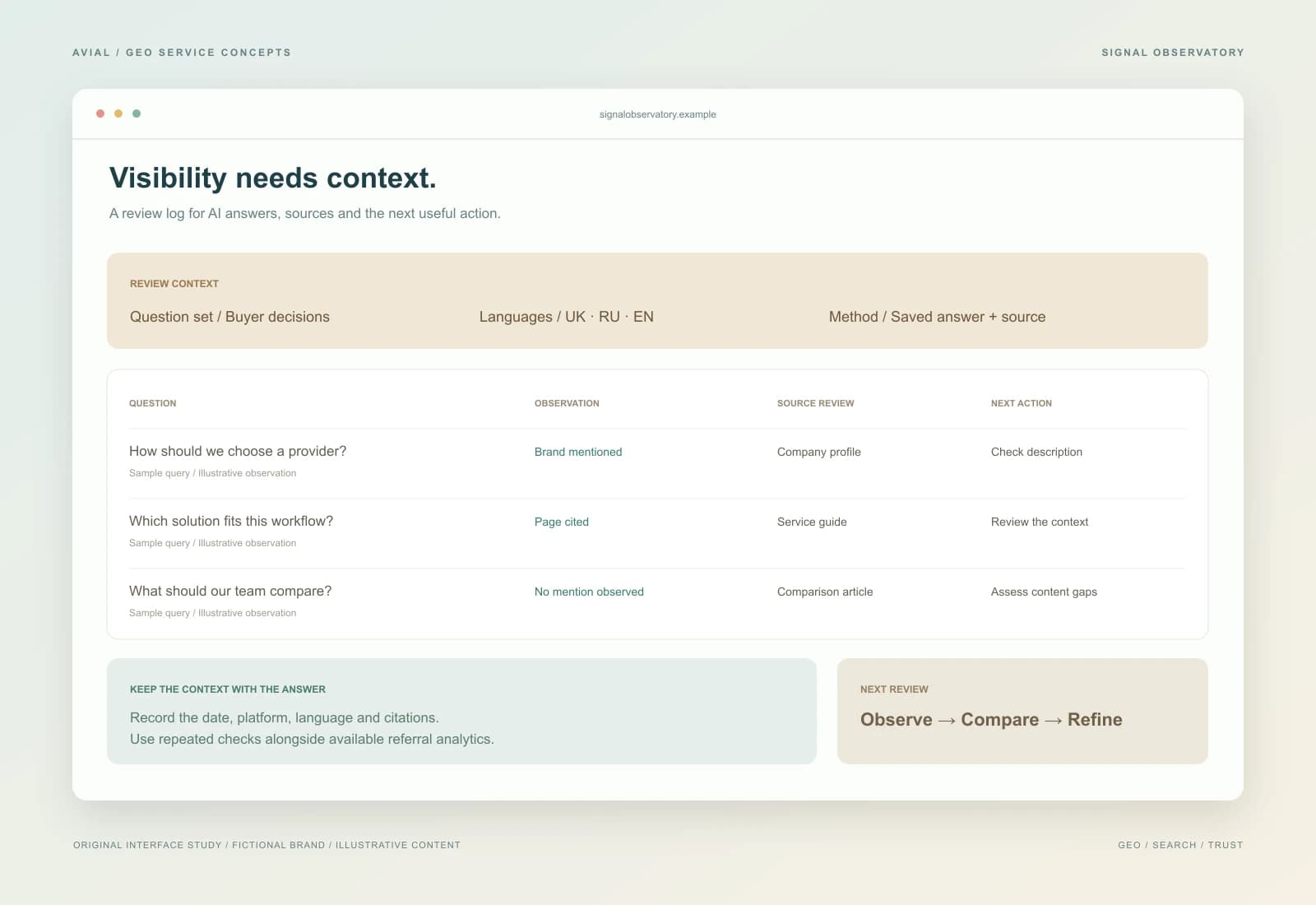
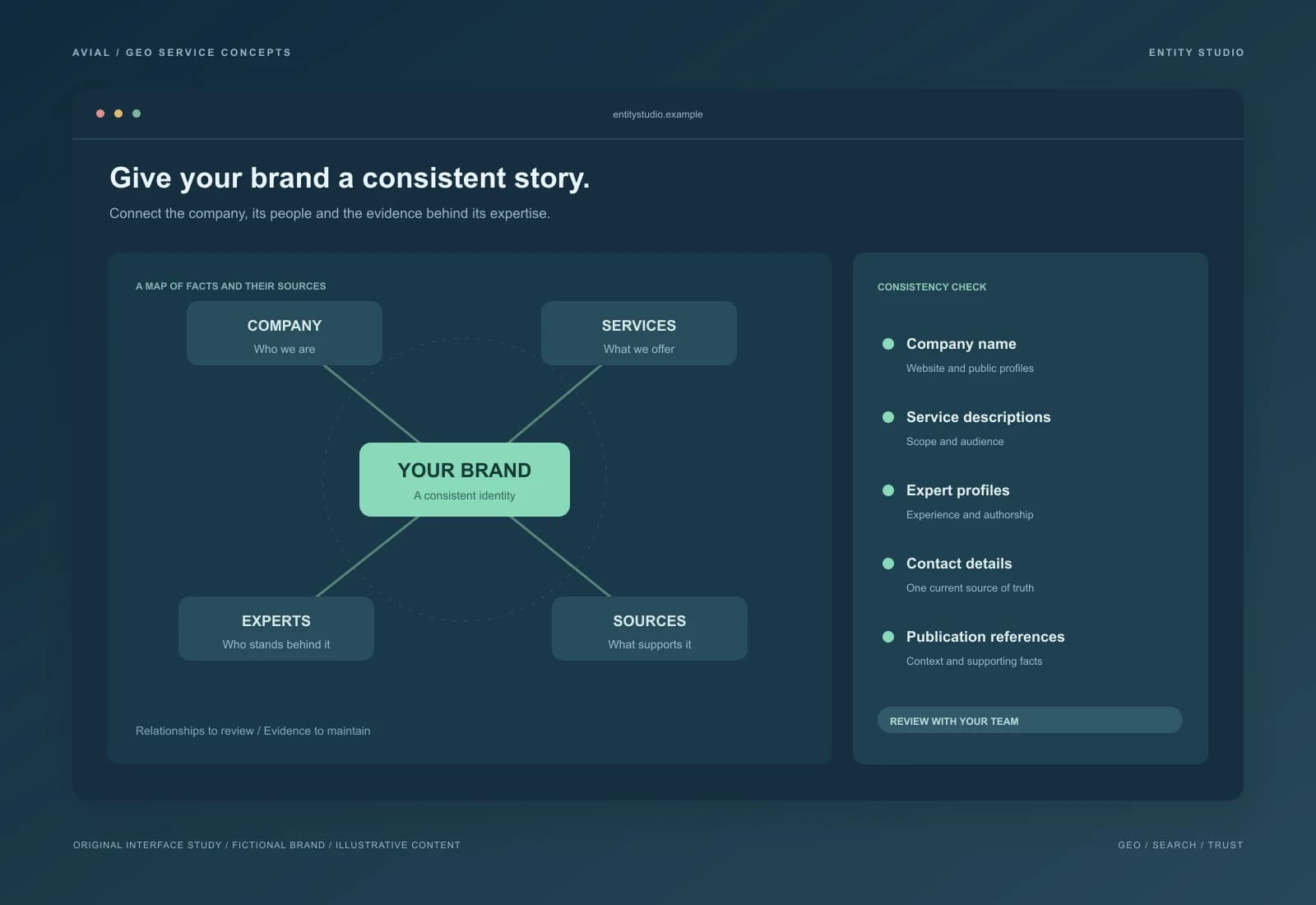
The first deliverable is a baseline. Prepare a controlled question set, inspect answers on the selected platforms and retain the sources. Review service pages alongside those observations: can a buyer understand the offer, conditions, contact details, expertise and limitations? Adding another keyword to an unrelated paragraph cannot substitute for a missing explanation.
Turn findings into a plan with named responsibilities. One task may require a technical correction, another an expert interview and a third an update to an outdated company profile. Each needs a reason, a deliverable and acceptance criteria. Publishing a page and observing it as a cited source are different stages, with no guaranteed interval between them.
Useful content has a job to do
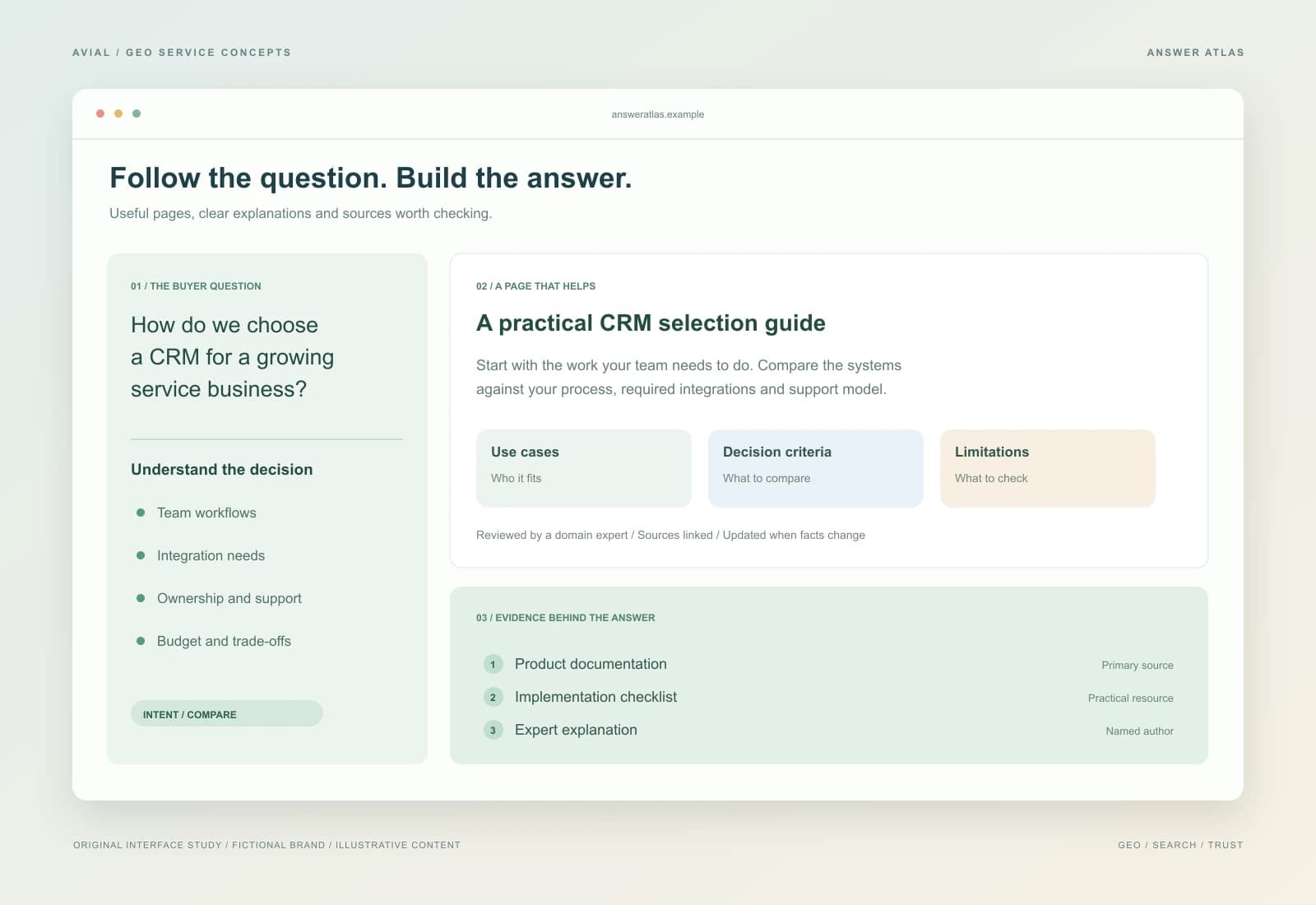
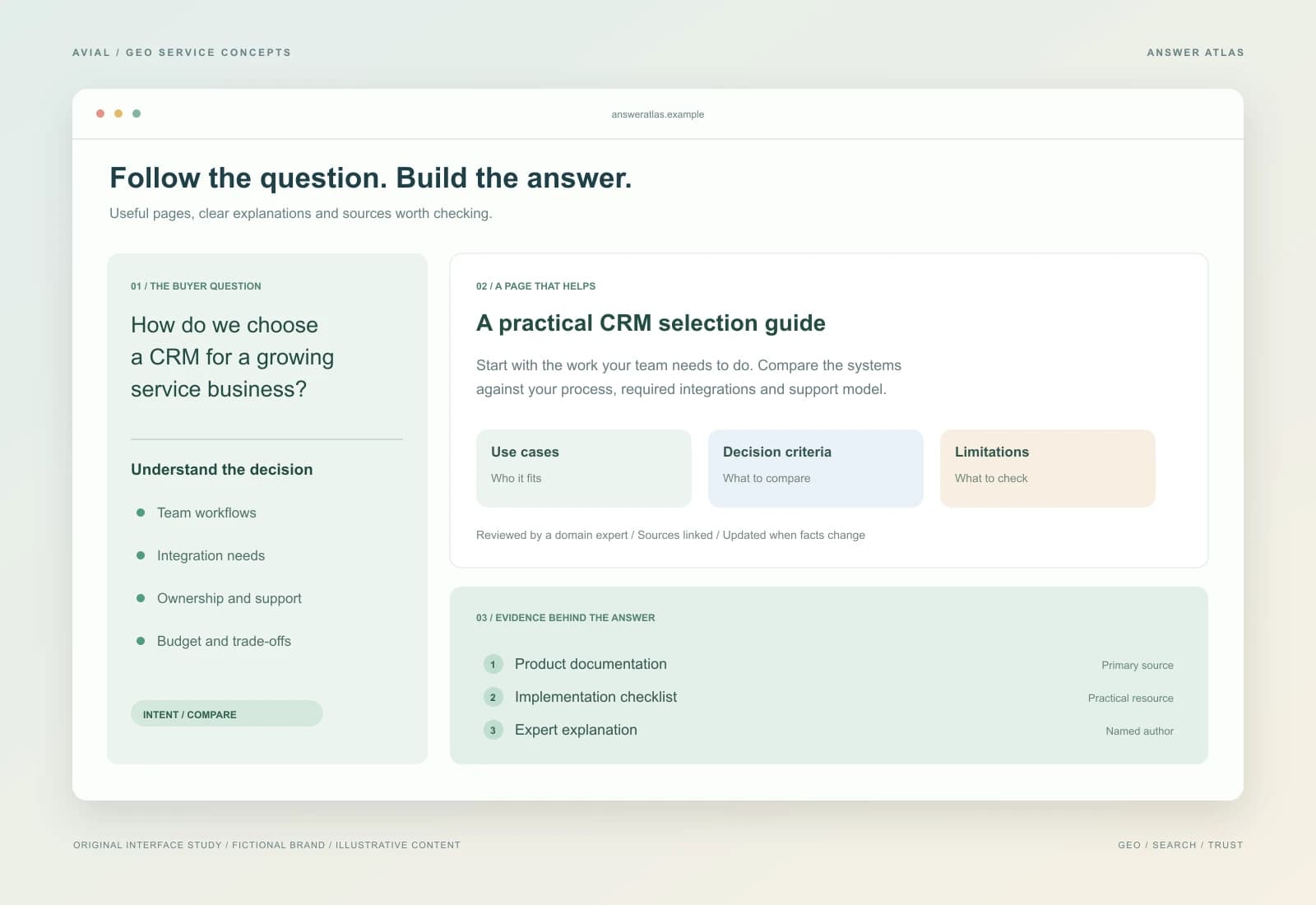
A strong page helps someone make a decision. It might explain the scope of support, required access, handover arrangements and situations where the service is unsuitable. A comparison needs explicit criteria; a claim about experience needs evidence. Repeating GEO or AI SEO throughout the page does not provide either.
Use material your team can substantiate: customer questions, documented methods and examples cleared for publication. If no client case study is available, demonstrate the approach with a clearly labelled concept. A report mock-up or illustrative scenario should never be presented as a measured client outcome.
Questions to ask before commissioning GEO work
Ask the provider to define platforms, markets, languages, baseline questions, planned content and reporting methods. Establish who checks facts and approves publication. A sensible budget relates to the work involved, not to a promise of occupying a particular place in an AI recommendation.
A limited pilot around one service and one market can help establish a repeatable process. Review what the team can actually measure before expanding. The next phase might require better content, technical repairs, independent coverage or a more representative set of questions rather than simply more pages.
Need an AI visibility audit for your business?
Explore our GEO and AI Search Optimization service