
Build a repeatable AI visibility review with defined questions, clear metrics, comparable observations and explicit attribution limits.
Define the sample before reporting a score
A visibility percentage only makes sense alongside a description of the sample. Specify the service, market, language and buying stage. Prepare branded questions to assess factual accuracy and unbranded questions to investigate discovery. Do not supply the company name in every question if the objective is to observe whether it appears without a prompt.
Freeze the question set before comparing periods. If you add questions later, create a new version. Otherwise a changing percentage may simply reflect a different sample. A small transparent set that the team can repeat and inspect is a more useful starting point than a large opaque score with an undocumented method.
Keep a record for each observation
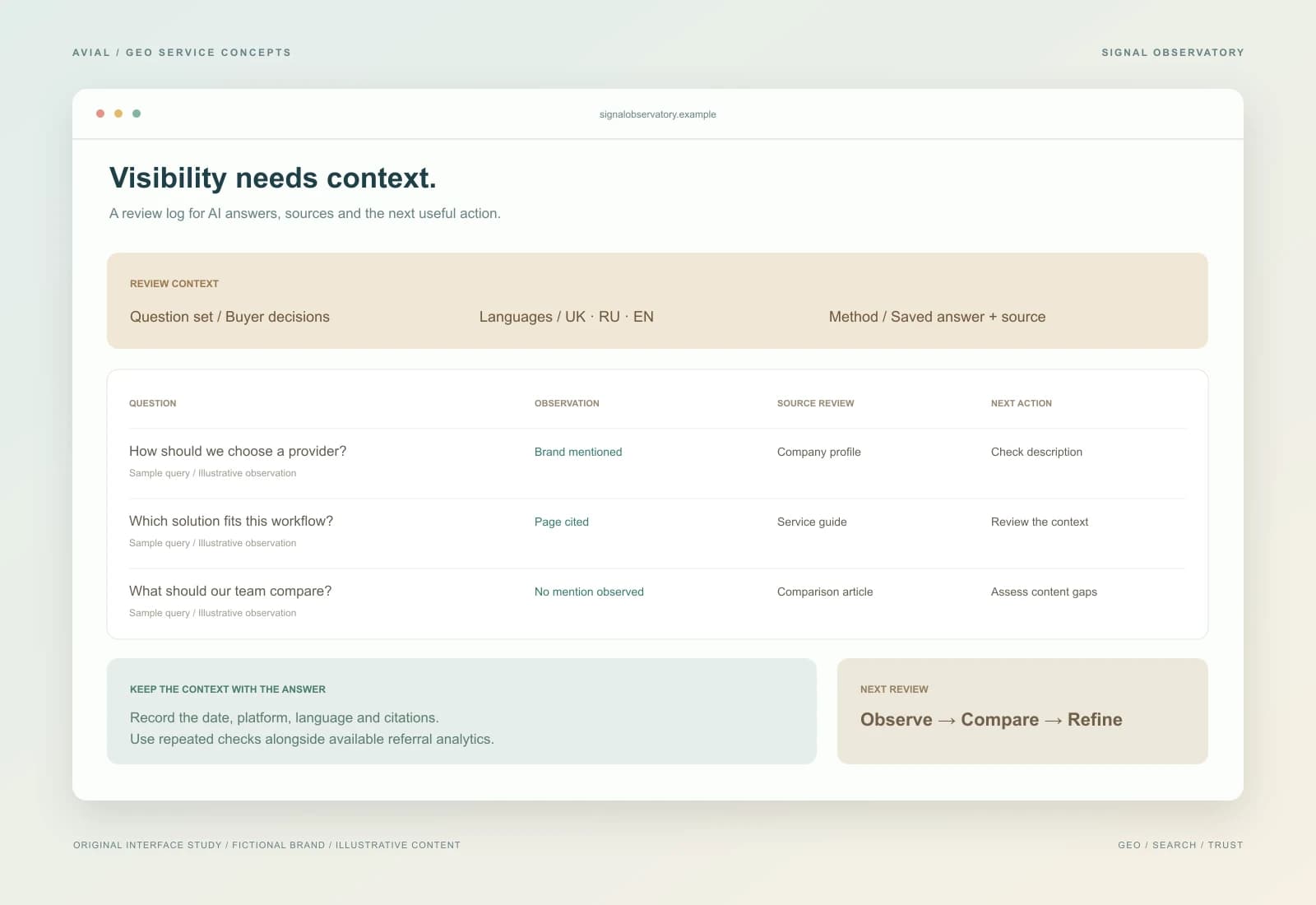
A minimum log includes the date and time, exact question, language, market, platform, search mode and conversation context. Save the answer and its source URLs. Use separate fields for a brand mention, factual accuracy, a relevant recommendation and a citation of your own page. None of those labels should silently stand in for another.
Separate independent tests from scenarios where you uploaded a company presentation or supplied suggested answers. Such context may be appropriate for a different evaluation, but it must be labelled. Record technical failures and missing answers too, rather than excluding them without explanation and making the remaining sample look artificially favourable.
Calculate mentions and citations separately
Define the unit of observation, such as one answer to one question under specified conditions. Mention share can then be the number of answers containing a relevant brand mention divided by valid checks. Track citations of the business’s own domain separately. Several URLs in one answer do not turn that answer into several independent observations.
For an illustrative example, six relevant brand mentions in 30 valid answers represent 20% of that sample. This is not market share, a sales forecast or a client result. Display the count, question set and relevance criteria alongside the percentage so someone else can understand what it measures and what it leaves out.
Compare periods under consistent conditions
Repeat the same questions under similar conditions and separate platforms and languages. Retain several observations instead of relying on one favourable run. Keep a parallel change log showing which pages were revised, which materials were published and what external coverage appeared during the period.
Timing alone does not establish causation. Answers may change because of context, service updates or new third-party sources. Distinguish observations from explanations you have not verified. If test conditions change substantially, begin a new series instead of directly comparing incompatible data or attributing every improvement to the latest website edit.
Connect the review with business decisions
Review available AI referral visits, landing pages and conversion events separately. Check that forms, enquiry sources and analytics events work correctly. A mention without a click may contribute to awareness, but it cannot be counted as a visit or a lead. Report measurement gaps with the results rather than hiding them in a footnote.
Finish with decisions: correct an inaccurate fact, publish a missing explanation, clarify service conditions or revise the next question set. The log should create a repeatable way of working. Its value lies in better editorial and commercial decisions, not in a promise to control every future AI answer.
Need an AI visibility audit for your business?
Explore our GEO and AI Search Optimization service