
How to approach ChatGPT SEO with clear buying scenarios, accessible pages, verifiable claims and a repeatable review of citations.
Define the answer you are trying to assess
A request to get a business into ChatGPT is too broad for a delivery plan. The objective might be an accurate brand description, inclusion among possible providers or a citation of a particular guide. Define these separately. Does the answer understand the service area, find the comparison page or attribute services the company does not offer? Each question produces a different kind of finding.
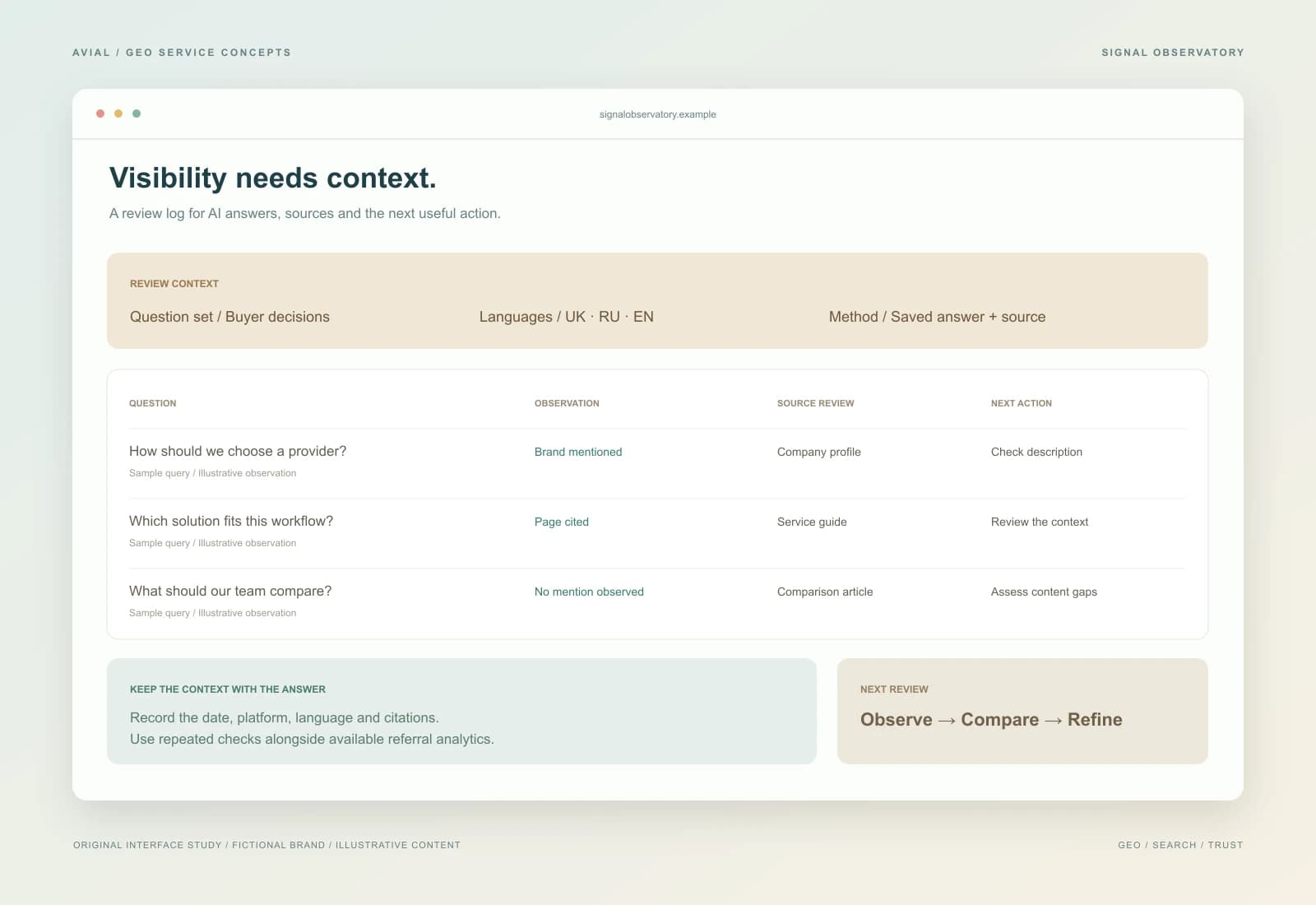
Record whether web search was used. An answer without it does not establish whether a page is currently discoverable through search. Also separate neutral questions from conversations where the evaluator supplied the company name, its advantages and a link. Those contexts should not be treated as comparable evidence of visibility.
Check whether priority material is accessible
OpenAI advises publishers not to block OAI-SearchBot when they want content included in search responses. Search access is distinct from permission to use material for model training. Review actual page access as well as robots.txt: the content should be public, and hosting protection should not return an error in place of the page.
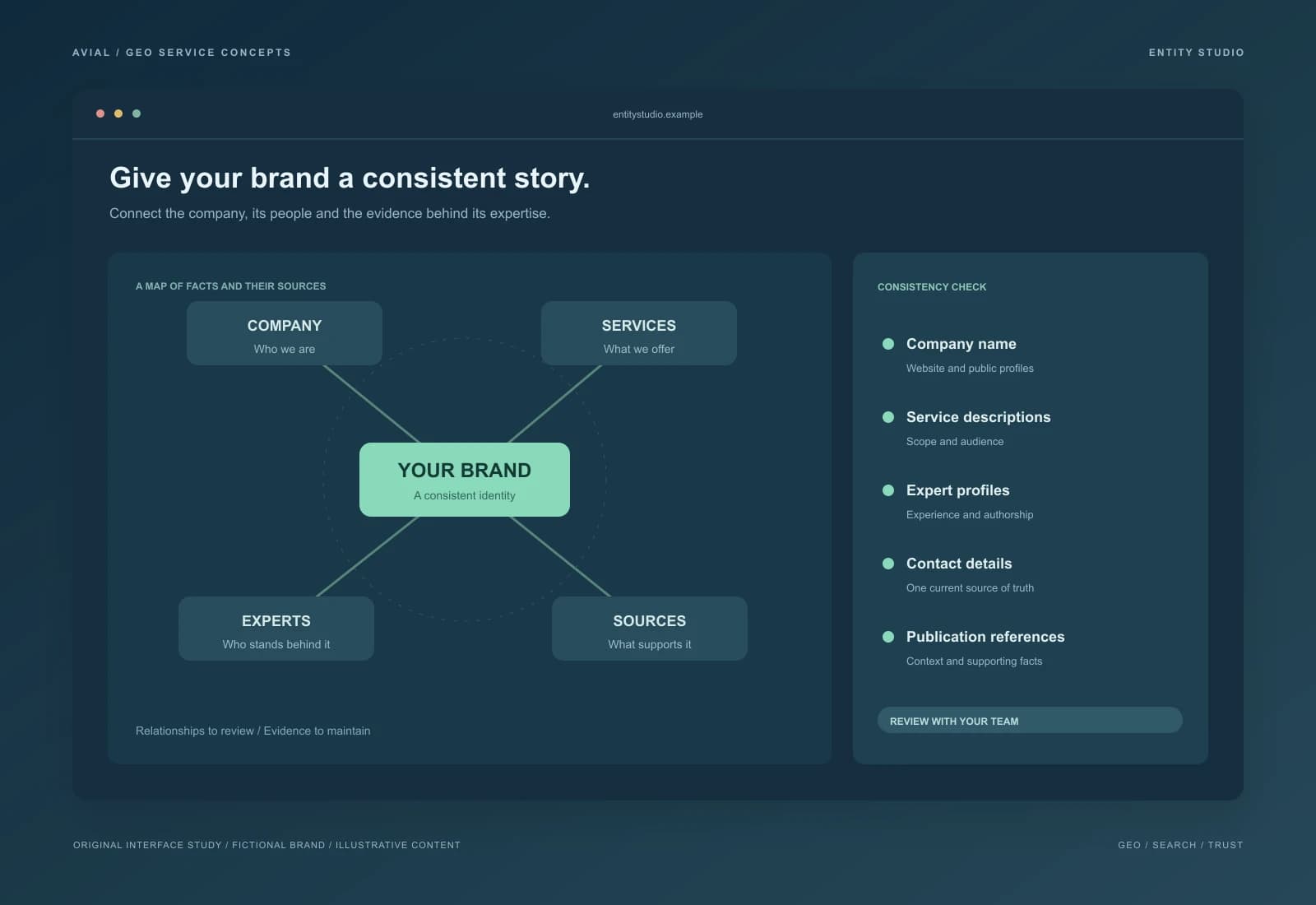
List the URLs that matter: company information, the core service, a substantive comparison and evidence of experience. Review their titles, navigation and purpose. If several pages cover almost the same subject, establish the role of each before creating another landing page. A clear information structure helps your team maintain the material as well as helping visitors find it.
Answer a real buying question thoroughly
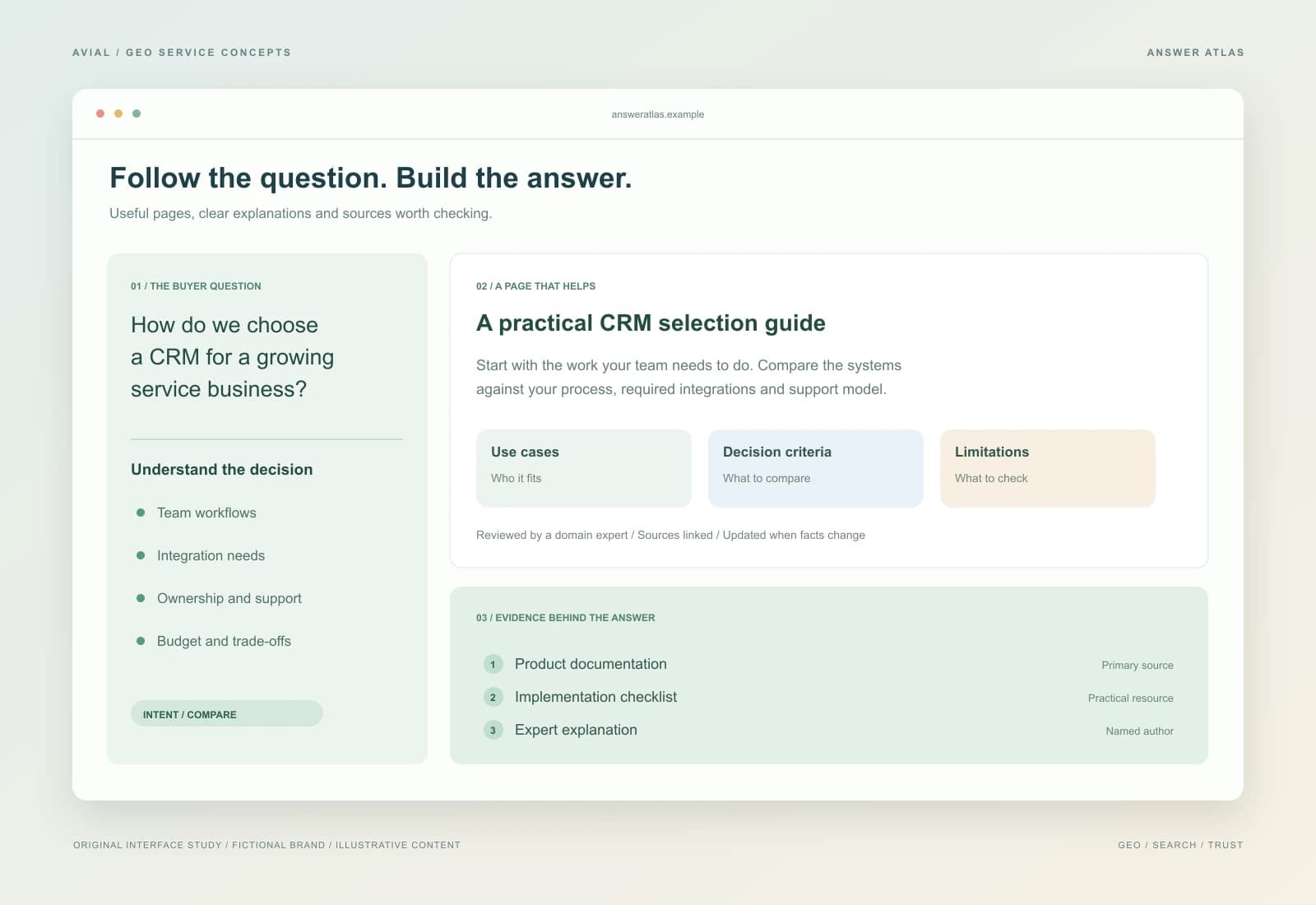
Choose a common scenario and explain the starting conditions, available options, comparison criteria, constraints and next step. For a support service, useful details include working hours, contact channels, scope and escalation. For implementation work, cover compatibility, access requirements and the boundaries of each party’s responsibility.
Ask the practitioner responsible for delivery to check the article. Avoid unsupported claims such as best or leading. Use only evidence that can be verified and is cleared for publication. The material should still help a buyer if it never receives an AI citation; otherwise the exercise risks becoming an attempt to guess a response format rather than communicate expertise.
Review citations in their actual context
Open each source and identify the statement it supports. A directory mentioning the company, a citation of its own guide and a mistaken link to a similarly named business are different observations. Give them separate labels. Counting all links together can create a misleading impression of progress.
There is no complete public formula for source selection. One successful test cannot establish that a platform prefers a particular page format. Focus instead on actionable findings: an outdated description, a missing comparison or a service claim that needs clarification. These can become tasks with concrete acceptance criteria.
Compare results under consistent conditions
Repeat the same question set after agreed changes and keep the date, language, mode, answer and sources. Count brand mentions, URL citations and available visits separately. OpenAI adds utm_source=chatgpt.com to referral links, which can help identify some inbound visits; it does not measure interactions that never produce a click.
A changed answer after publication does not prove that the publication caused it. Report the number of observations and possible alternative explanations. A useful review informs the next editorial or technical decision instead of promising a permanent recommendation for any question or a predetermined number of sales.
OpenAI — Publishers and Developers
Need an AI visibility audit for your business?
Explore our GEO and AI Search Optimization service