
Where Generative Engine Optimization and SEO overlap, how their measurements differ, and how to plan one coherent search programme.
Different answer experiences, shared foundations
In conventional search, a user selects a result and opens a page. In a generative interaction, the user may read an explanation, ask a follow-up and only then visit a source. A business therefore needs to inspect not only whether a page appears, but also how its offer is described. That changes the emphasis of evaluation; it does not remove the value of SEO.
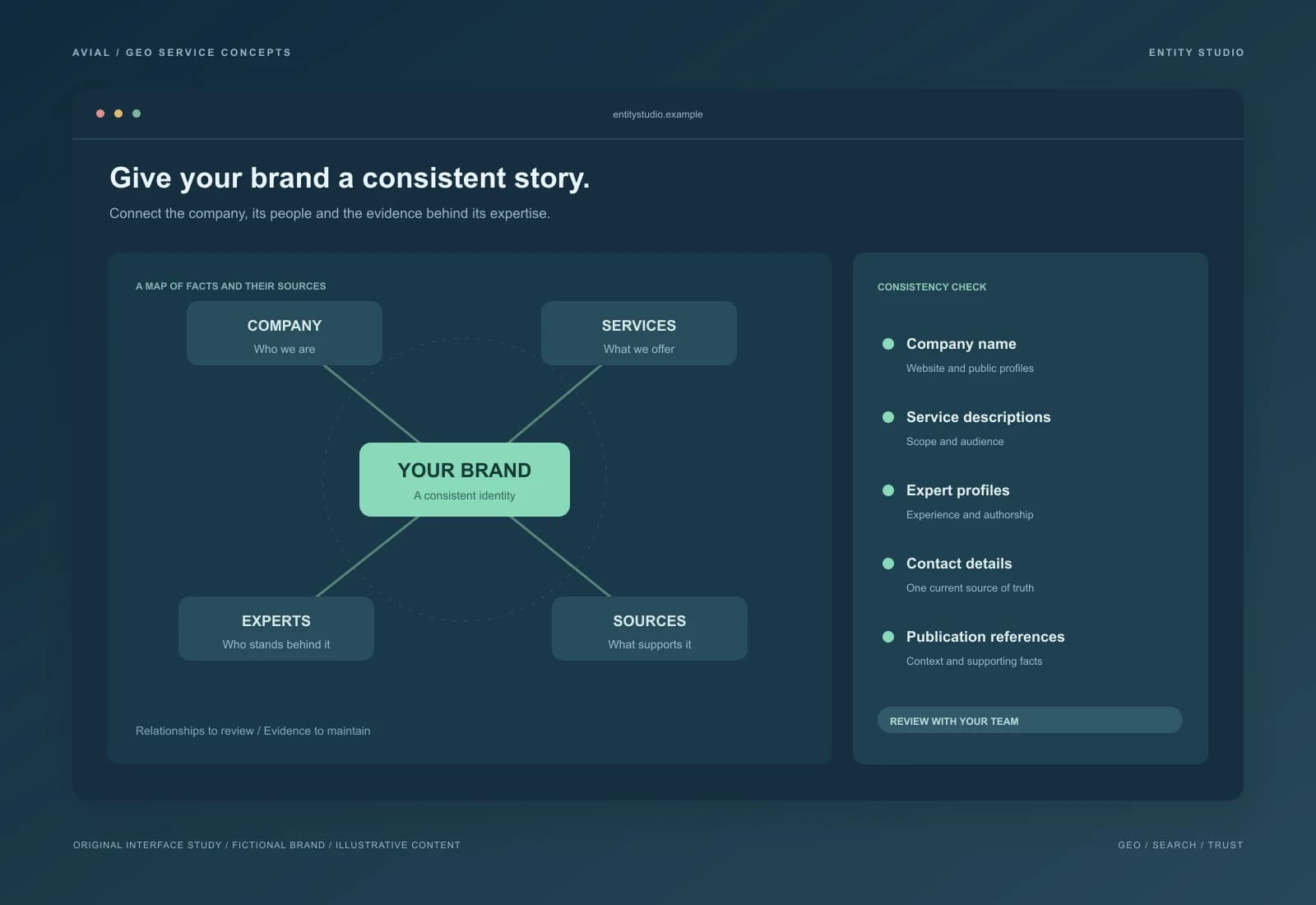
Both approaches rely on understandable pages, accessible information and supported claims. Technical errors, conflicting descriptions and thin content do not become useful when labelled GEO. Google explicitly states that foundational SEO practices remain relevant to its AI search features. Treat the two disciplines as connected work rather than competing packages.
From keyword lists to buying scenarios
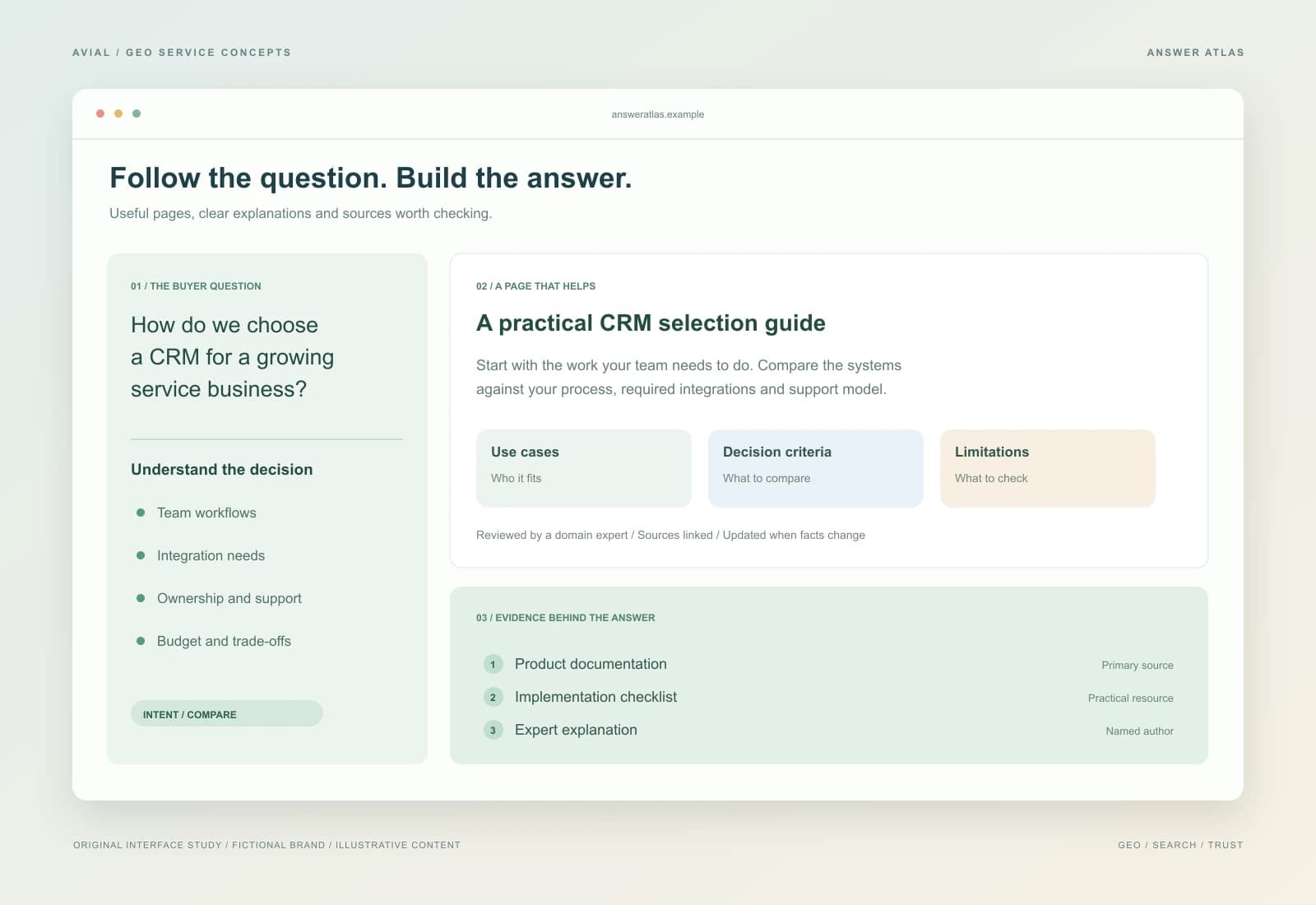
SEO already requires attention to search intent, not just individual keywords. GEO adds a useful reason to document the conversation around a decision: what the buyer knows, which constraints apply and what they may ask next. A question about choosing a CRM can lead to migration, integration and support questions that deserve distinct explanations.
Do not create a new page for every variation in wording. Group questions around a real user task and produce a page that serves it well. A service landing page can address commercial intent while a linked guide explains a method or comparison. That structure supports discovery without filling the site with near-duplicate pages.
Give every content format a clear role
A service page explains scope, selection criteria, conditions and limitations. An educational article investigates a defined question. A case study documents a starting point, completed work and verified outcomes. These formats perform different jobs but can belong to the same information architecture, helping people move from investigation to a purchasing decision.
For AI visibility reviews, also consider whether an individual statement remains accurate outside the full page context. Names, units, dates and limitations should be explicit. This is editorial discipline rather than a guaranteed citation technique. Oversimplifying a complex claim until it becomes misleading defeats the purpose of making the material easier to understand.
Keep measurement categories separate
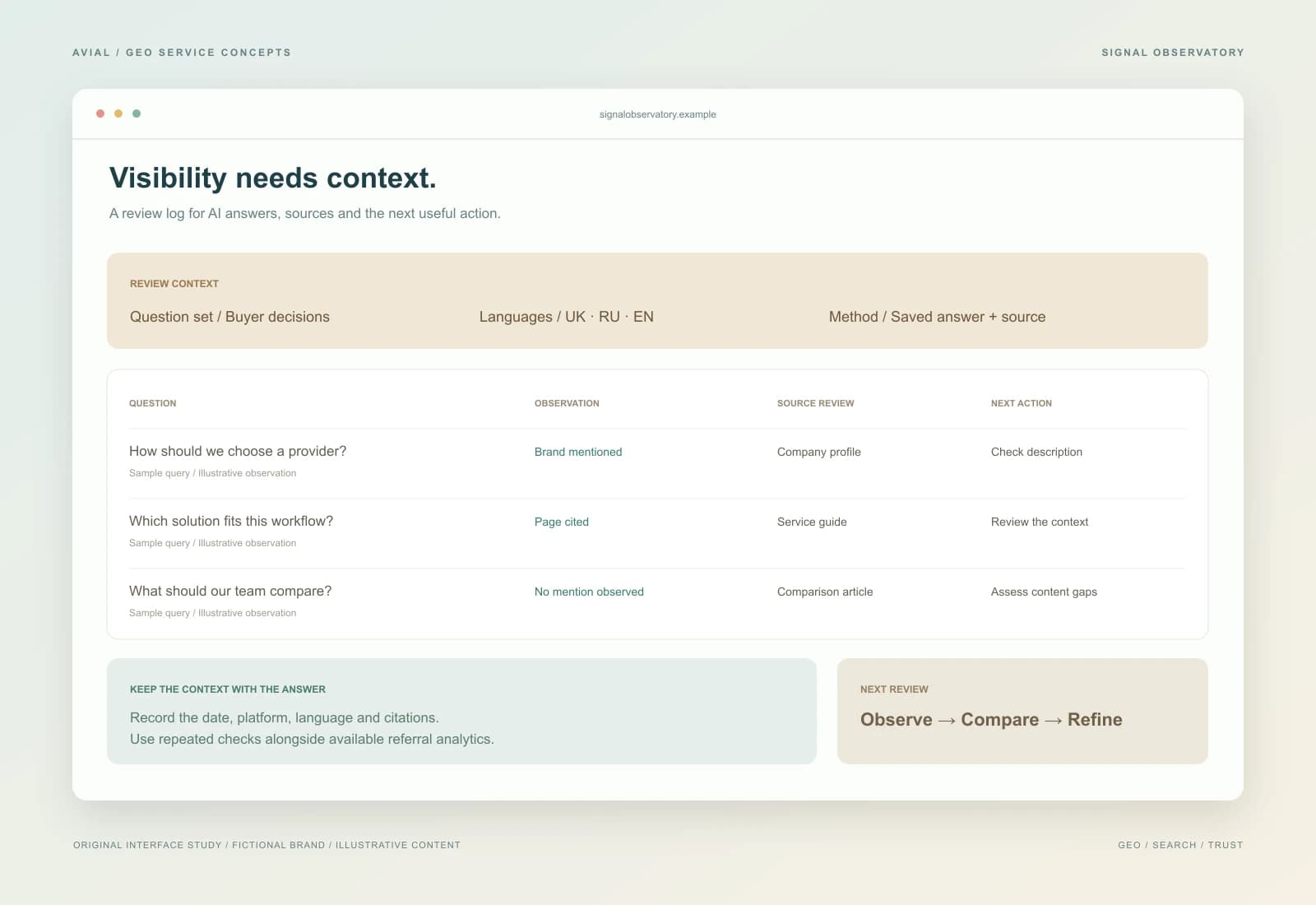
SEO reporting can include impressions, rankings, clicks and conversions. GEO reviews add observed mentions, cited URLs and answer accuracy. A search ranking is not the brand’s position in every AI response, and more mentions in a small sample do not establish sales growth. Each observation answers a different question.
Use two connected reporting sections: delivered work and visibility observations. State the source and limitations of each metric. This makes it possible to assess useful technical and editorial progress without combining incompatible numbers into an attractive percentage or attributing an outcome to one change without adequate evidence.
Plan responsibilities and budget together
Start by removing barriers that prevent people from using the website or discovering important material. Identify the missing explanations needed to choose a service. In parallel, establish a small repeatable AI review set. This provides context without spending the budget on random questions and screenshots that cannot be compared.
One team can manage both disciplines when responsibilities and acceptance criteria are clear. Assign technical work, practitioner review, editing and analytics explicitly. GEO adds questions about how the business appears in generated answers; it does not replace the underlying work with a special file or a new collection of keywords.
Google Search Central — AI features and your website
Need an AI visibility audit for your business?
Explore our GEO and AI Search Optimization service